
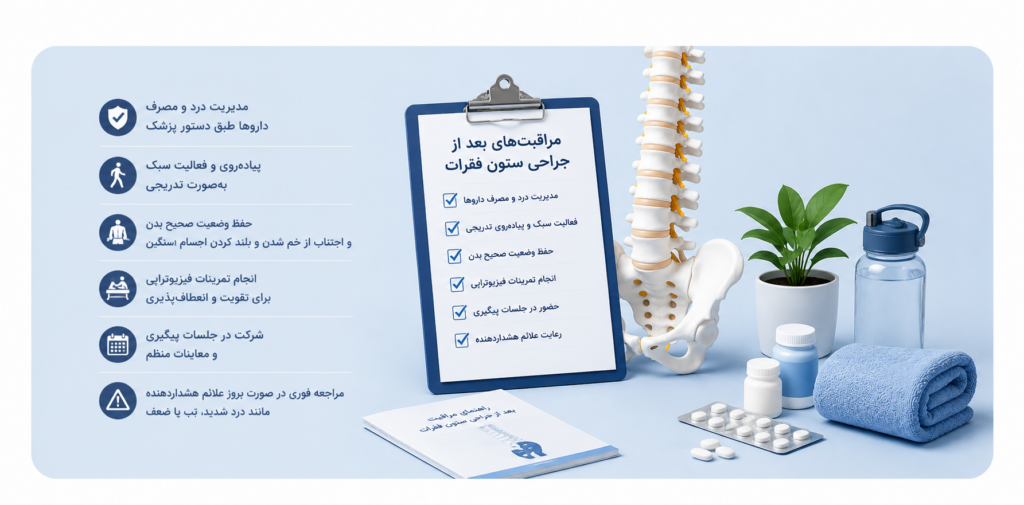
Patient Guide
Postoperative Care After Spine Surgery
Congratulations on successfully completing your spine surgery. The care you receive and the precautions you take at home from this point forward play a crucial role in your recovery, reducing the risk of complications, and achieving the best possible surgical outcome.
This guide has been prepared to answer the most common questions asked by patients and their families and to provide practical, evidence-based recommendations for the postoperative period. Please read it carefully, and if you have any questions or concerns, do not hesitate to contact your healthcare team.
The First 24 Hours After Surgery
The first few hours after spine surgery are among the most important stages of your recovery. Many patients are unsure which symptoms are expected and which require immediate medical attention. Understanding what to expect can reduce anxiety and help ensure a safer recovery.
Recovery Room (Post-Anesthesia Care Unit)
Immediately after surgery, you will be transferred to the recovery room (PACU), where specially trained nurses and the anesthesia team will closely monitor your condition. Your blood pressure, heart rate, oxygen saturation, breathing, and level of consciousness will be checked regularly to ensure that you are recovering safely from anesthesia.
Once the effects of anesthesia have worn off and your condition is stable, you will be transferred to your hospital room.
Symptoms That Are Usually Normal
The following symptoms are common during the first hours and days after spine surgery and usually improve gradually:
- Pain around the surgical incision
- Mild sore throat or dry throat caused by the breathing tube used during general anesthesia
- Mild nausea or vomiting
- Drowsiness or fatigue
- Mild numbness around the incision
- General tiredness and reduced energy during the first few days
These symptoms are generally temporary and should gradually improve as your recovery progresses.
Pain Management
It is important to understand that the goal of postoperative pain management is not necessarily to eliminate all pain. Instead, the objective is to reduce your pain to a comfortable level that allows you to walk, rest, breathe deeply, sleep, and gradually resume your daily activities.
If your pain is not adequately controlled despite taking the prescribed medications, notify your healthcare team promptly.
Early Mobilization
Contrary to a common misconception, prolonged bed rest is generally not recommended after spine surgery. Depending on the type of procedure and your surgeon's recommendations, many patients are encouraged to begin walking on the day of surgery or the following morning.
Early walking provides several important benefits, including:
- Reducing the risk of blood clots in the legs (deep vein thrombosis)
- Improving lung function
- Reducing the likelihood of constipation
- Preventing muscle weakness
- Promoting faster recovery
- Helping you return to normal daily activities sooner
During the first few days after surgery, several short walks throughout the day are much more beneficial than one long walk. Increase your activity gradually and avoid overexertion.
Neurological Assessment
Following surgery, your surgical team will regularly assess your muscle strength, sensation, and neurological function. After discharge, if you notice new weakness, significant numbness, decreased muscle strength, or difficulty controlling your bladder or bowel function, contact your spine surgeon immediately.
Hospital Discharge
The length of your hospital stay depends on several factors, including the type of surgery performed, your overall health, and your recovery progress. Some patients are discharged the day after surgery, while others may require several days of hospitalization.
Recovery after spine surgery is a gradual process. Do not expect all pain and physical limitations to disappear immediately after surgery. Patience, following your surgeon's instructions carefully, and adhering to your rehabilitation plan are the keys to achieving the best possible outcome.
Seek immediate medical attention or contact your spine surgeon if you experience progressive weakness in your arms or legs, severe uncontrolled pain, chest pain, shortness of breath, loss of bladder or bowel control, or any new neurological symptoms.
Surgical Wound Care
Proper wound care is one of the most important factors in preventing infection and achieving the best possible outcome after spine surgery. Fortunately, in the vast majority of patients, the surgical incision heals without difficulty when the surgeon's postoperative instructions are carefully followed.
Remember that wound healing is a natural biological process. The purpose of postoperative wound care is to provide the ideal environment for your body to heal—not to perform complicated treatments or apply unnecessary medications.
What Is Normal After Surgery?
During the first several days after surgery, the following findings are usually considered normal:
- Mild to moderate pain around the incision
- Mild swelling surrounding the wound
- Minor bruising around the surgical site
- A feeling of tightness around the incision when moving
- Mild numbness of the skin adjacent to the incision
These symptoms generally improve gradually over the following days and weeks.
Why Is Proper Wound Care Important?
Your surgical incision represents a temporary opening in the body's natural protective barrier. Although every incision is closed under sterile conditions in the operating room, proper home care is essential to minimize the risk of infection and promote healthy healing.
Most wound problems can be successfully treated if they are recognized early. For this reason, careful daily inspection of the incision is extremely important.
Does the Incision Need to Remain Covered All the Time?
No. One of the most common misconceptions is that a surgical wound should remain tightly covered until the sutures are removed.
In many patients, once the incision has sealed appropriately and your surgeon confirms that there is no active drainage, allowing the wound to receive adequate air circulation helps support normal healing. Healthy wound healing requires an appropriate balance between moisture and ventilation.
Keeping the incision continuously covered without medical necessity may trap excessive moisture, increase perspiration, soften the surrounding skin (skin maceration), and, in some patients, increase the risk of wound complications.
Once your surgeon advises that it is safe to do so, allow your incision to remain uncovered for much of the day in a clean environment. The purpose of a dressing is to protect the wound from contamination—not to keep it permanently sealed.
Waterproof Dressings and Commercial Wound Dressings
Many commercially available waterproof dressings are useful in selected situations. However, they are not intended for continuous long-term use in every patient.
Waterproof dressings are primarily designed to protect the incision during showering. Unless specifically instructed by your surgeon, they should not remain in place continuously for several days without being changed.
Prolonged use of completely occlusive dressings may trap moisture against the skin, increase perspiration, delay drying of the incision, and interfere with normal wound healing.
Waterproof dressings are intended mainly for shower protection—they are not designed to keep the wound continuously covered throughout the day.
How Often Should the Dressing Be Changed?
For most patients, the dressing should be changed once daily. Daily dressing changes help keep the incision clean while allowing regular inspection of the wound.
If the dressing becomes wet, soiled, or if the wound produces more drainage than expected, it may need to be changed twice a day.
The frequency of dressing changes should always be individualized according to your wound condition and your surgeon's recommendations.
How to Change the Dressing Properly
- Wash your hands thoroughly with soap and water for at least 30 seconds before touching the dressing.
- Prepare all dressing supplies before beginning.
- Carefully remove the old dressing.
- Inspect the incision for redness, swelling, drainage, or separation of the wound edges.
- If instructed by your surgeon, gently clean the surrounding skin using sterile gauze.
- Do not apply povidone-iodine (Betadine), alcohol, hydrogen peroxide, antibiotic powders, or any other chemicals unless specifically recommended by your surgeon.
- Apply a clean sterile dressing.
- Wash your hands again after completing the dressing change.
When Can I Take a Shower?
After most routine spine procedures, patients can usually take a brief shower approximately 48 to 72 hours after surgery, provided that the incision is dry and there is no active drainage. The exact timing depends on the type of surgery and the condition of the wound, and your surgeon's instructions should always take priority.
Use lukewarm water and avoid directing a strong stream of water onto the incision.
After showering, gently pat the incision dry with a clean, soft towel. Do not rub the wound.
Until your incision has completely healed, avoid soaking it in a bathtub, swimming pool, hot tub, sauna, or any environment where the wound remains submerged in water.
Suture or Staple Removal
In most patients, skin sutures or staples are removed approximately 10 to 14 days after surgery following examination by the surgeon. However, the exact timing may vary depending on the type of surgery, skin quality, diabetes, nutritional status, and individual healing characteristics.
When Should You Contact Your Surgeon Immediately?
If you notice any of the following, do not wait until your next scheduled appointment. Contact your surgical team as soon as possible using the phone number or WhatsApp contact provided on this website. Whenever possible, send several clear photographs of the incision to assist in the initial assessment.
- Increasing redness around the incision
- Yellow, green, or foul-smelling drainage
- Separation or opening of the wound
- Significant swelling around the incision
- Fever higher than 38°C (100.4°F)
- Unexpected increase in pain around the surgical site
- Any new change in the appearance of the wound that causes concern
Early recognition of wound problems often allows simple treatment and helps prevent more serious complications. If you are uncertain about the appearance of your incision, do not wait for it to worsen. Contact your surgeon promptly and, whenever possible, include clear photographs of the wound.
Pain Management, Medications, and Factors That Influence Bone Healing
One of the primary goals after spine surgery is to control pain effectively while creating the best possible environment for tissue healing and, when spinal fusion has been performed, successful bone fusion. Taking your medications correctly and following your surgeon's recommendations play a major role in achieving the best long-term outcome.
Pain After Spine Surgery
Experiencing some pain after surgery is completely normal and should be expected. The intensity and duration of pain vary from one patient to another depending on the type of procedure, the extent of surgery, and each individual's medical condition.
The goal of pain management is not necessarily to eliminate all discomfort, but rather to reduce pain to a level that allows you to sleep comfortably, walk safely, perform breathing exercises, and gradually return to your normal daily activities.
It is generally better to take your prescribed pain medications according to the recommended schedule rather than waiting until the pain becomes severe, as severe pain is often more difficult to control.
Normal Pain vs. Concerning Pain
During the first several weeks after surgery, pain usually improves gradually. However, it is common to experience occasional days when discomfort is slightly greater than the previous day, particularly after increased physical activity. This does not necessarily indicate a problem.
On the other hand, pain that suddenly becomes much more severe, continues to worsen, or is associated with fever, wound drainage, new weakness, numbness, or loss of bladder or bowel control should never be considered normal and requires prompt medical evaluation.
A temporary increase in muscle soreness after gradually increasing your daily activity is often expected. However, severe or progressively worsening pain should always be reported to your surgeon.
Non-Steroidal Anti-Inflammatory Drugs (NSAIDs)
If you have undergone spinal fusion surgery, your surgeon may advise you to avoid non-steroidal anti-inflammatory drugs (NSAIDs) during the early healing period.
Medications such as Ibuprofen, Naproxen, Diclofenac, Ketorolac, Indomethacin, Meloxicam, Celecoxib, and similar drugs may interfere with the biological process of bone healing. Several studies suggest that prolonged use of these medications during the early postoperative period may reduce the likelihood of achieving a successful spinal fusion.
For this reason, unless your surgeon specifically instructs otherwise, these medications should generally be avoided after spinal fusion surgery.
Do not start taking ibuprofen, naproxen, diclofenac, celecoxib, ketorolac, or any other NSAID without discussing it with your spine surgeon, particularly if you have undergone a spinal fusion procedure.
Calcium and Vitamin D
Successful spinal fusion depends on your body's ability to form new bone. Calcium and vitamin D play essential roles in this process.
If recommended by your physician, calcium and vitamin D supplementation may help provide optimal conditions for bone healing, particularly in older adults, patients with osteoporosis, or individuals with documented vitamin D deficiency.
Do not take high doses of supplements without medical supervision, as the appropriate dosage should be individualized according to your medical condition and laboratory results.
Nutrition and Bone Healing
Your body requires adequate nutrition to repair skin, muscles, ligaments, and bone after surgery.
A healthy postoperative diet should include:
- High-quality protein (lean meat, poultry, fish, eggs, dairy products, legumes, and beans)
- Fresh fruits and vegetables
- Whole grains
- Adequate daily fluid intake
If your appetite is reduced after surgery, eating smaller meals more frequently is often preferable to eating a few large meals.
Smoking, Nicotine, and Bone Fusion
Nicotine is one of the most significant preventable risk factors for failure of spinal fusion.
Nicotine reduces blood flow to bone, impairs the function of bone-forming cells (osteoblasts), slows bone healing, and significantly increases the risk of failed fusion (pseudoarthrosis).
It is important to understand that this risk is not limited to cigarettes. All nicotine-containing products—including cigars, hookah (water pipe), electronic cigarettes (vaping), nicotine patches, nicotine gum, and smokeless tobacco—may negatively affect bone healing.
Smoking also increases the risk of wound infection, delayed skin healing, persistent pain, and the need for additional surgery.
If you have undergone spinal fusion surgery, complete avoidance of nicotine before and after surgery offers one of the greatest opportunities to improve the likelihood of successful bone healing. Even small amounts of nicotine may interfere with the fusion process.
Diabetes and Blood Sugar Control
Patients with diabetes should pay particular attention to maintaining good blood glucose control during the recovery period.
Poorly controlled diabetes increases the risk of wound infection, delays wound healing, and may negatively affect bone healing. Continue taking your diabetes medications as prescribed and follow your physician's recommendations regarding diet and blood sugar monitoring.
Osteoporosis
If you have osteoporosis or are receiving treatment for low bone density, continue your medications unless your physician advises otherwise.
Optimizing bone health before and after surgery improves implant fixation, promotes successful spinal fusion, and reduces the risk of future fractures.
Alcohol Consumption
Excessive alcohol intake may interfere with wound healing, increase the risk of falls during the recovery period, and interact with prescribed pain medications.
If you consume alcohol regularly, discuss this with your surgeon and avoid alcohol while taking opioid pain medications or other medications that may cause drowsiness.
Taking your medications exactly as prescribed, maintaining a healthy diet rich in protein, ensuring adequate calcium and vitamin D intake when recommended, controlling diabetes, avoiding nicotine completely, and attending all follow-up appointments are among the most important steps you can take to maximize the success of your spine surgery and, when applicable, achieve a solid spinal fusion.
Daily Activities, Walking, Sitting, Sleeping, and Brace Use
One of the most common questions patients ask after spine surgery is, "When can I return to my normal daily activities?" The answer depends on several factors, including the type of surgery, your age, bone quality, overall health, and the speed of your recovery. The recommendations below provide general guidance; however, your surgeon's specific instructions always take priority.
Walking – The Best Exercise After Spine Surgery
Walking is the single most important form of exercise during the first weeks after spine surgery. Regular walking improves circulation, reduces the risk of blood clots, helps maintain muscle strength, improves lung function, decreases constipation, and promotes faster recovery.
After discharge, begin with several short walks each day and gradually increase the duration as your strength improves.
Suggested Walking Program
- Week 1: Walk 4–6 times each day for approximately 5–10 minutes.
- Week 2: Increase each walk to approximately 10–15 minutes.
- Weeks 3–4: Gradually increase walking time to approximately 15–20 minutes per session.
- After the first month: Continue increasing your walking distance and duration gradually as recommended by your surgeon.
This schedule is intended only as a general guideline. Your individual recovery program may differ depending on your procedure and your surgeon's recommendations.
Several short walks throughout the day are generally more beneficial than one prolonged walk. Listen to your body, rest when needed, and increase your activity gradually.
Sitting
Prolonged sitting should be avoided during the first several weeks after surgery. Sitting places greater pressure on the lumbar spine than standing or walking.
Whenever possible, avoid sitting continuously for longer than approximately 20 to 30 minutes during the early recovery period. Stand up, walk for a few minutes, or change your position before sitting again.
When sitting:
- Choose a firm chair with good back support.
- Keep both feet flat on the floor.
- Avoid slouching or bending forward.
- Avoid very soft sofas or deep chairs that make standing difficult.
Getting Out of Bed
When getting out of bed, first roll onto your side, then lower your legs over the edge of the bed while pushing yourself up with your arms. This technique, commonly known as the log-roll technique, minimizes twisting forces on your spine.
Avoid sitting straight up from a flat position whenever possible.
Sleeping Position
Most patients are comfortable sleeping either on their back or on their side.
If you sleep on your side, placing a pillow between your knees may help maintain better spinal alignment and reduce strain on your lower back.
If you sleep on your back, placing a small pillow beneath your knees often provides additional comfort.
Unless specifically instructed otherwise by your surgeon, avoid sleeping on your stomach during the early postoperative period.
Using Stairs
If your strength and balance are adequate and your surgeon has not imposed restrictions, climbing stairs is generally safe within the first few days after surgery.
Use the handrail whenever possible, take one step at a time, and avoid rushing.
Lifting Objects
Avoid lifting heavy objects during the first weeks after surgery.
Unless your surgeon advises otherwise, do not lift objects heavier than approximately 3–5 kilograms (7–10 pounds) during the initial recovery period.
When lifting an object from the floor, bend your knees rather than your back, keep the object close to your body, and avoid sudden twisting movements.
Avoid the combination of Bending, Lifting, and Twisting (BLT) during the early stages of recovery. These three movements place the greatest mechanical stress on the healing spine.
Brace Use
Not every patient requires a spinal brace after surgery. The decision depends on the type of procedure performed, the stability of the spine, bone quality, and your surgeon's preference.
If a brace has been prescribed, wear it exactly as instructed.
In many cases, the brace is intended for use while standing, walking, or leaving the house. Most patients do not need to wear the brace while sleeping unless specifically instructed by their surgeon.
Your brace should fit securely without being excessively tight. It should not interfere with breathing or cause excessive pressure on the skin.
Skin Care While Wearing a Brace
- Wear a clean cotton shirt beneath the brace whenever possible.
- Inspect your skin daily for redness, blisters, or pressure sores.
- If the brace causes significant pain or skin breakdown, contact your surgeon or orthotist.
Traveling by Car
Long car journeys should be avoided during the first few weeks after surgery whenever possible.
If travel is necessary, stop every 30 to 60 minutes, get out of the vehicle, and walk for several minutes to reduce stiffness and lower the risk of blood clots.
Driving
Do not drive until your surgeon has determined that it is safe to do so.
Before returning to driving, you should:
- Be able to move comfortably without significant pain.
- Have sufficient strength and reaction time to control the vehicle safely.
- No longer be taking opioid pain medications or any medication that causes drowsiness.
The safest way to return to normal activities is gradually. Allow your body sufficient time to heal, increase your activity level step by step, and avoid comparing your recovery with that of other patients, as healing rates vary considerably.
Returning to Work, Exercise, Follow-up Care, and Long-Term Recovery
One of the most common questions after spine surgery is, "When can I return to my normal life?" The answer varies from one patient to another and depends on the type of surgery, your overall health, your occupation, and your rate of recovery. The following recommendations are intended as general guidelines. Your surgeon's specific advice should always take priority.
Returning to Work
The appropriate time to return to work depends largely on the physical demands of your occupation.
- Patients with office-based or sedentary jobs are often able to return to work earlier than those whose jobs involve heavy physical labor.
- Occupations requiring repetitive bending, heavy lifting, climbing, or prolonged standing usually require a longer recovery period.
- If possible, consider returning to work gradually by reducing working hours or workload during the first few weeks.
Even if you feel well, do not resume physically demanding work until your surgeon confirms that it is safe to do so.
Exercise and Sports
Walking remains the best form of exercise during the early recovery period.
As healing progresses, your surgeon may recommend stretching exercises, strengthening exercises, or a supervised rehabilitation program.
Until your surgeon gives approval, avoid activities such as:
- Running
- Jumping
- Heavy weightlifting
- Contact sports
- High-impact aerobic activities
- Any exercise that causes significant pain or excessive twisting of the spine
Returning to sports should always be gradual and individualized according to the type of surgery and your overall recovery.
Physical Therapy
Not every patient requires formal physical therapy after spine surgery.
Many patients recover successfully through a structured walking program and gradual return to normal daily activities. However, some patients—particularly those who have undergone extensive surgery or who have significant muscle weakness—may benefit from a supervised rehabilitation program.
Do not begin intensive spinal exercises without discussing them with your surgeon or physical therapist.
Sexual Activity
Most patients can safely resume sexual activity once their pain has improved and they are able to move comfortably without excessive discomfort.
During the early recovery period, avoid positions that require excessive bending, twisting, or prolonged stress on the spine.
If you have undergone spinal fusion or complex reconstructive surgery, ask your surgeon for individualized recommendations.
Nutrition During Recovery
Proper nutrition plays an important role in wound healing, muscle recovery, and bone healing.
Your diet should include:
- Adequate protein
- Fresh fruits and vegetables
- Whole grains
- Adequate hydration
- Foods rich in vitamins and minerals
A balanced diet provides your body with the nutrients needed to support healing and regain strength.
Constipation
Constipation is common after surgery because of decreased activity, changes in diet, and the use of opioid pain medications.
To reduce the risk of constipation:
- Drink plenty of fluids.
- Walk several times each day.
- Eat foods that are rich in dietary fiber.
- Use stool softeners or laxatives if prescribed by your physician.
If constipation becomes severe or persists despite treatment, contact your healthcare provider.
Maintaining a Healthy Weight
Excess body weight places additional stress on the spine and may contribute to future back problems.
Once your surgeon approves increased physical activity, maintaining a healthy body weight can help improve long-term outcomes, decrease stress on the spine, and reduce the risk of future degeneration.
Follow-up Appointments
Regular follow-up visits are an essential part of your treatment.
During these visits, your surgeon will evaluate your wound healing, neurological function, pain level, recovery progress, and, when appropriate, the progress of spinal fusion using clinical examination and imaging studies.
Even if you feel well, do not skip your scheduled follow-up appointments.
MRI and CT Scans
Most patients do not require routine MRI or CT scans after spine surgery.
Additional imaging studies are performed only when clinically indicated or when requested by your surgeon to evaluate healing or investigate new symptoms.
Please avoid obtaining unnecessary imaging studies without consulting your surgeon.
Recovery after spine surgery is a gradual journey rather than a single event. Following your surgeon's instructions carefully, remaining physically active within recommended limits, maintaining a healthy lifestyle, and attending scheduled follow-up visits are the most important factors in achieving an excellent long-term outcome.
When Should You Seek Immediate Medical Attention?
Contact your spine surgeon immediately or seek emergency medical care if you experience any of the following:
- Fever higher than 38°C (100.4°F)
- Pus or foul-smelling drainage from the incision
- Increasing redness or swelling around the wound
- New or worsening weakness in the arms or legs
- Loss of bladder or bowel control
- Progressive numbness or loss of sensation
- Severe pain that is not relieved by prescribed medications
- Chest pain or shortness of breath
- Sudden swelling or pain in the calf, which may indicate a blood clot
If you develop any concerns during your recovery—especially increasing wound redness, drainage, fever, severe pain, or new neurological symptoms—do not wait until your next scheduled appointment. Contact our office using the telephone number or WhatsApp contact listed on this website. Whenever possible, include several clear photographs of your incision to assist in the initial assessment.
Final Thoughts
Successful spine surgery depends not only on the operation itself but also on careful postoperative care and active participation in your recovery.
By following your surgeon's recommendations, taking your medications as prescribed, maintaining a healthy lifestyle, and attending regular follow-up visits, most patients can expect a safe recovery and a gradual return to normal daily activities.
We wish you a smooth recovery, lasting good health, and a successful return to your normal life.
Dr. Nima Ostadrahimi, MD
Neurosurgeon
Fellowship-Trained Spine Surgeon
Assistant Professor of Neurosurgery
Tehran University of Medical Sciences (TUMS)